Unsecured vs Secured: Choosing the Best Consolidation Path

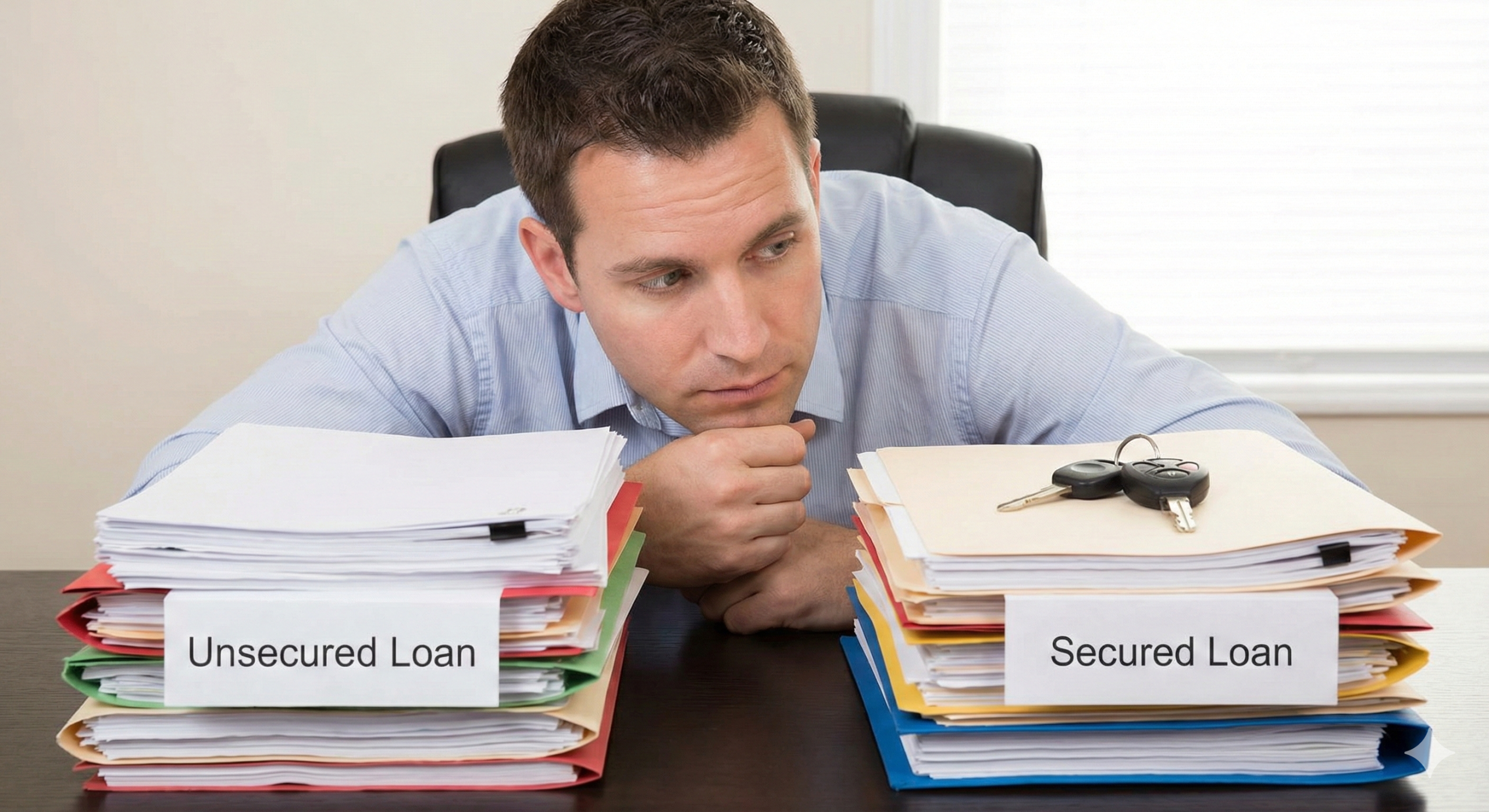
Navigating the path to financial freedom from high-interest credit card debt often leads to one critical decision: choosing the right consolidation loan. For many, the primary options boil down to secured versus unsecured financing. Understanding the difference is key to making a choice that aligns with your financial situation and risk tolerance. While both can simplify your payments into a single monthly bill, unsecured debt consolidation loans offer a route that doesn’t require you to pledge a personal asset as collateral, a feature that provides significant peace of mind for many borrowers. This guide will explore the nuances of both secured and unsecured paths, helping you determine the best strategy to tackle your debt effectively.
What Are Unsecured Debt Consolidation Loans?
An unsecured debt consolidation loan is a type of personal loan that you can use to pay off other existing debts, primarily high-interest credit cards. The defining characteristic of an “unsecured” loan is that it is not backed by any collateral. Collateral is a valuable asset, like a house or a car, that you pledge to a lender. If you were to default on a secured loan, the lender could seize that asset. With an unsecured loan, the lender has no such claim on your property. Instead, lenders approve these loans based on your creditworthiness.
Lenders evaluate several factors to determine your eligibility and interest rate for unsecured debt consolidation loans. These include your credit score, credit history, income, and debt-to-income (DTI) ratio. Because the lender is taking on more risk without the safety net of collateral, interest rates on unsecured loans may be slightly higher than those for secured loans. However, for borrowers with a strong credit profile, the rates can still be significantly lower than the 20%+ APRs common with credit cards. This makes them an excellent tool to Consolidate Credit Card Debt: Lower Your Interest Rates in 2026 and accelerate your journey out of debt.
Understanding Secured Debt Consolidation Loans
In contrast, a secured debt consolidation loan requires you to provide collateral. This collateral acts as security for the lender. Common forms of collateral include your home (for a home equity loan or HELOC) or your vehicle (for a car title loan). By providing this security, you reduce the lender’s risk. If you fail to make payments as agreed, the lender has the legal right to take possession of the asset to recoup their losses.
The primary advantage of this arrangement is that it often allows borrowers to access lower interest rates and higher loan amounts than they could qualify for with an unsecured loan. This is especially true for individuals with less-than-perfect credit. The lender’s reduced risk translates into more favorable terms for the borrower. However, the downside is significant: you are putting a major asset on the line. Defaulting on a secured loan could lead to foreclosure on your home or repossession of your car, consequences far more severe than the credit score damage from defaulting on an unsecured debt.
Unsecured vs. Secured Loans: A Direct Comparison
Choosing between these two options requires a careful evaluation of the pros and cons as they relate to your personal financial landscape. The decision hinges on your credit profile, your comfort with risk, and whether you have a valuable asset you are willing to pledge. For many people looking to consolidate credit card balances, the simplicity and safety of unsecured debt consolidation loans are preferable. Before making any decisions, it’s wise to use tools to see potential outcomes; you can learn more by Calculating Your Savings: Debt Consolidation Loan Calculator to estimate how different rates and terms will impact your budget.
| Feature | Unsecured Consolidation Loan | Secured Consolidation Loan |
|---|---|---|
| Collateral Required | No | Yes (e.g., home, car, savings) |
| Risk to Borrower | Lower (no risk of losing assets) | Higher (risk of asset seizure) |
| Typical Interest Rates | Moderate to High (based on credit) | Lower (due to reduced lender risk) |
| Approval Basis | Credit score, income, DTI ratio | Credit score and value of collateral |
| Loan Amounts | Typically up to $50,000, sometimes $100,000 | Can be higher, based on asset equity |
| Funding Speed | Fast, often within 1-5 business days | Slower, requires asset appraisal |
Qualifying for the Best Personal Loans for Consolidation
Securing the most favorable terms on an unsecured loan requires preparation. Lenders are looking for reliable borrowers, and the more you can demonstrate your financial stability, the better your offers will be. The goal is to find the best personal loans for consolidation that offer a low APR and a manageable monthly payment. This process involves more than just filling out an application; it’s about presenting the strongest possible financial profile. Learning How to Refinance Credit Cards with Low APR Personal Loans is a crucial step in this journey.
Your credit score is the single most important factor. A score in the good-to-excellent range (typically 670 and above) will unlock the best interest rates and terms. Lenders also scrutinize your debt-to-income (DTI) ratio, which compares your monthly debt payments to your gross monthly income. A lower DTI ratio (ideally below 36%) signals to lenders that you have sufficient income to handle a new loan payment. Improving these metrics before you apply can save you thousands of dollars over the life of the loan.
Checklist for Unsecured Loan Application
- Check Your Credit Reports: Obtain free copies of your credit reports from all three major bureaus (Equifax, Experian, TransUnion). Review them for errors and dispute any inaccuracies immediately.
- Know Your Credit Score: Understand where your score stands. If it’s lower than desired, take steps to improve it, such as paying bills on time and reducing credit card balances.
- Calculate Your Total Debt: Sum up the balances of all the high-interest debts you plan to consolidate. This will determine the loan amount you need to request.
- Determine Your Budget: Analyze your monthly income and expenses to figure out what monthly loan payment you can comfortably afford.
- Gather Necessary Documents: Lenders will typically require proof of identity (driver’s license), proof of income (pay stubs, tax returns), and proof of address (utility bill).
- Pre-qualify with Multiple Lenders: Shop around with at least 3-5 lenders, including banks, credit unions, and online platforms. Pre-qualification uses a soft credit check that doesn’t harm your score and allows you to compare real interest rate offers.
- Compare Loan Offers: Look beyond the interest rate. Compare origination fees, repayment terms (loan length), and any prepayment penalties before making a final decision.
Featured Snippet: The primary difference between unsecured and secured debt consolidation is collateral. Unsecured debt consolidation loans do not require you to pledge an asset like a house or car. Approval is based on your creditworthiness. Secured loans require collateral, which reduces lender risk and may result in lower interest rates but puts your asset at risk if you default.
Frequently Asked Questions (FAQ)
Can I get an unsecured debt consolidation loan with bad credit?
It is more challenging but not impossible. Some lenders specialize in loans for borrowers with fair or poor credit (scores below 630). However, you should expect to face much higher interest rates and stricter qualification requirements. Improving your credit score before applying is the best strategy to get more favorable terms.
What is considered collateral for a secured loan?
Collateral is a valuable asset that secures the loan. The most common types of collateral for consolidation loans are real estate (your home’s equity) for a home equity loan or HELOC, or a vehicle for an auto equity loan. Some lenders may also accept savings accounts or investment portfolios as collateral.
Are there any hidden fees with unsecured loans?
While not “hidden,” you must be aware of potential fees. The most common is an origination fee, which is a percentage of the loan amount (typically 1% to 8%) deducted from the loan proceeds. Always read the loan agreement carefully and ask about origination fees, late payment fees, and any prepayment penalties before you sign.
How quickly can I get funds from an unsecured debt consolidation loan?
Unsecured loans are known for their speed. Many online lenders can provide a decision within minutes and deposit the funds into your bank account in as little as one to two business days after approval. This is much faster than secured loans, which require time for an asset appraisal.
Does consolidating debt hurt my credit score?
There can be a temporary, minor dip in your credit score when you apply for a new loan due to the hard credit inquiry. However, in the long run, a consolidation loan can help your credit score. It can improve your credit utilization ratio (by paying off revolving credit card balances with an installment loan) and simplify payments, making it easier to build a positive payment history.
What happens if I default on a secured consolidation loan?
Defaulting on a secured loan has severe consequences. Because you pledged an asset as collateral, the lender has the legal right to seize that asset to cover their losses. If you used your home as collateral, this could mean foreclosure. If you used your car, it could be repossessed. This is the most significant risk associated with secured lending.
Are the best personal loans for consolidation always unsecured?
For many people consolidating credit card debt, the best personal loans for consolidation are indeed unsecured because they don’t risk personal property. They offer a straightforward path to a single, lower-interest payment. However, for a homeowner with significant equity and a disciplined budget, a secured HELOC might offer a lower rate, making it a “better” mathematical choice if they are comfortable with the risk.
Conditions vary by profile. Consult official terms. Indicative information.
Official Sources and References
By clicking the links above, you will be redirected to external websites. We are not responsible for third-party content. Always verify information from official sources.